


Published
9 minute read
For patients researching breast augmentation, the question of which implant to go with starts getting a bit more complicated once they realize “silicone” isn’t a complete answer. Motiva is one of the newer options getting attention, while traditional silicone implants are still widely used and familiar to many surgeons and patients. That naturally leads to a question: is Motiva actually better, or is it simply different?
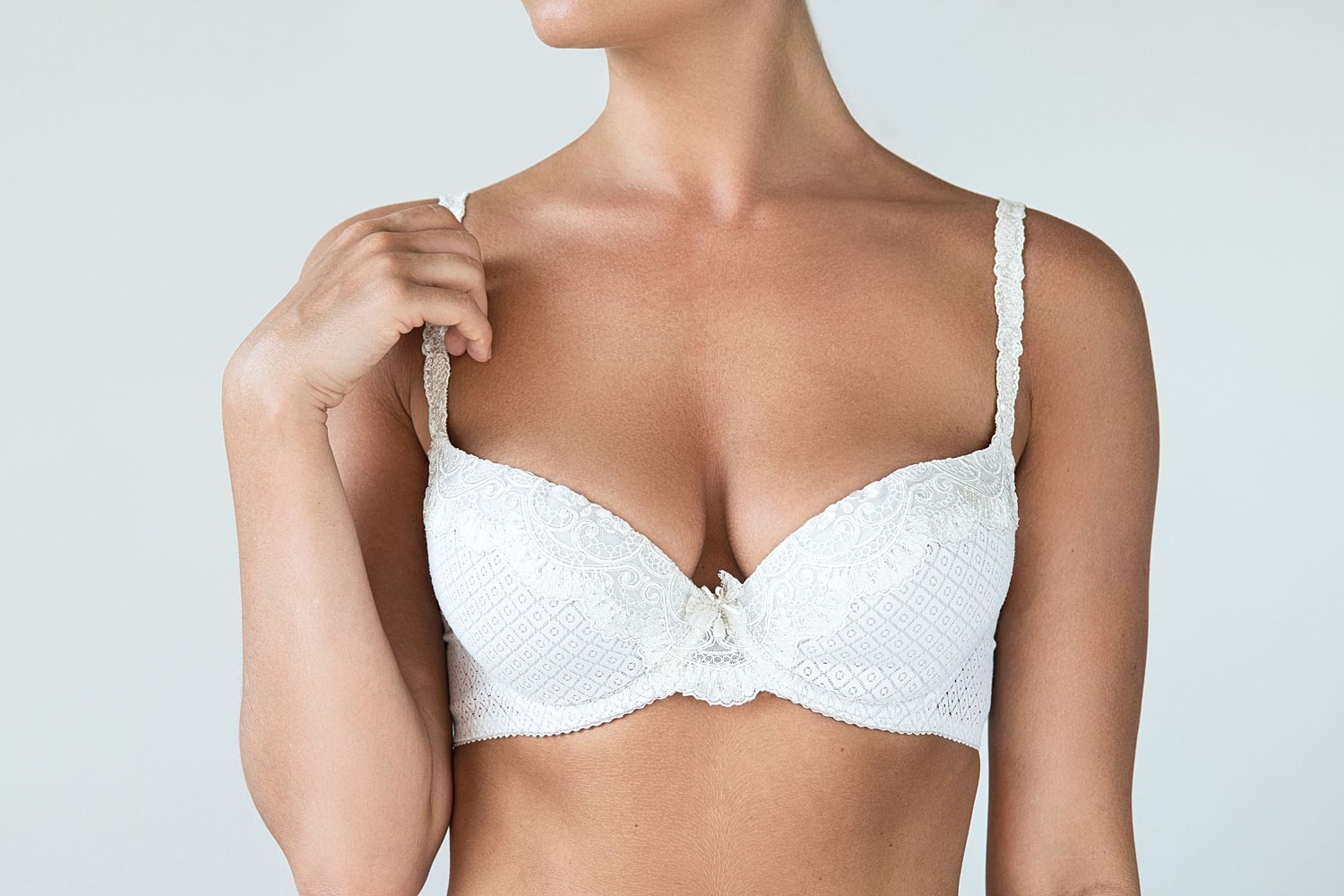
To sort through that, let's take a closer look at what Motiva breast implants are, how they compare with traditional silicone options, and which differences tend to matter most when patients are weighing feel, safety, movement, and long-term results.
Motiva breast implants are silicone gel breast implants made by Establishment Labs. In the U.S., the FDA-approved options currently include Motiva SmoothSilk Round and Motiva SmoothSilk Ergonomix for primary augmentation and revision augmentation in women 22 and older.
That means Motiva is part of the silicone implant category, not a separate implant type. The difference is in the design of the implant itself, including the shell, the gel, and the way it is built to behave once it is in the body.
Usually, they mean the silicone implants that have been used longer in the U.S. market and that many plastic surgeons have worked with for years. That broad group includes standard round silicone implants and the more cohesive silicone gel implants called gummy bear breast implants or form-stable implants.
That is part of what makes this comparison harder than it first sounds. “Traditional silicone” is not one implant. It is a category with different gel fills, different firmness levels, different shapes, and different projection profiles. Some are chosen for softness. Some are chosen for shape control. Some are chosen because surgeons know their long-term behavior very well.
The main difference is the design approach. Motiva uses a smooth surface, specific shell characteristics, and silicone gel behavior intended to create a softer, more mobile result.
For patients, the practical question is usually simple: how does the implant feel, and how does it move? That is where the differences tend to matter most. Implant shape, shell design, and pocket placement can all affect how an implant settles and how it behaves over time.
Often, yes. Many patients and surgeons describe Motiva implants, especially Ergonomix, as softer and more mobile than some traditional silicone implants. That is one of the main reasons people start comparing them in the first place.
Still, the implant brand is only one part of the answer. Feel also depends on natural breast tissue, skin quality, chest width, implant placement, and how much soft-tissue coverage a patient has. The same silicone implant can feel different in two different bodies.
Sometimes, but “natural” means different things to different patients.
Some patients want softer movement and a gentler slope. Others want fuller upper breasts and a rounder result in clothing. Motiva Ergonomix is often discussed in terms of movement and position change, which is part of why it appeals to patients who want a breast that looks less fixed.
At the same time, implant size, profile, breast tissue, and pocket placement matter just as much as brand. A newer implant does not automatically create a better result if the size or plan is wrong for the patient.
They are FDA-approved, but that does not mean risk-free.
Motiva implants went through the FDA premarket approval process, and the approval materials describe a prospective multicenter clinical study with long-term follow-up built into the review pathway. That means the device was evaluated through the standard PMA process used for higher-risk medical devices.
But breast implants are still medical devices, and the usual risks still apply. Motiva’s U.S. safety information states that breast implants are not lifetime devices and that complications can include capsular contracture, rupture, infection, implant removal, and reoperation.
Capsular contracture is one of the complications patients ask about most often. It happens when the scar tissue, or fibrous capsule, around the implant tightens and squeezes it. In more severe cases, the breast can feel firm, look distorted, or become painful. The FDA lists capsular contracture as a major breast implant risk.
This is one area where Motiva has drawn attention. FDA-reviewed materials cite a retrospective study of 1,324 cases with SmoothSilk Motiva implants that reported an overall capsular contracture rate of 1.8%, including lower rates in primary cases than in revisional cases. That is encouraging, but it does not mean any implant is immune to scar tissue problems. Technique, pocket control, infection prevention, and individual healing still matter.
If a saline implant ruptures, the breast usually deflates in a way that patients notice fairly quickly. The saline is absorbed by the body. With silicone gel breast implants, a rupture can be silent. The FDA states that most ruptured silicone implants do not cause obvious symptoms, which is why imaging matters. Magnetic resonance imaging is the most effective method for detecting silent ruptures, and ultrasound is an acceptable alternative for screening asymptomatic patients.
Visible rippling can happen with breast implants when there is not much natural tissue covering the implant. That means body type, tissue thickness, implant size, and pocket placement all matter. Some surgeons believe certain implant fills and shell designs may help in selected patients, but no implant removes the issue completely when tissue coverage is low.
Breast implant-associated anaplastic large cell lymphoma, or BIA-ALCL, is a rare T-cell lymphoma that develops in the scar tissue and fluid around a breast implant. Most available data suggest BIA-ALCL occurs more commonly with textured implants than with smooth-surfaced implants. The FDA has said those reports are rare and that the cause, incidence, and risk factors are still not well understood.
Patients and clinicians use the term breast implant illness to describe a range of systemic symptoms reported after breast implant surgery. Those symptoms can include fatigue, brain fog, joint pain, anxiety, hair loss, and other concerns. The FDA also states that breast implant illness is not a formal medical diagnosis and that there are no specific tests or recognized criteria to define it.
These symptoms have been reported with all kinds of breast implants, regardless of fill, shape, or surface. Some patients report improvement after breast implant removal, but the cause of these symptoms remains unclear.
Not as much as patients expect.
Breast implant surgery still comes down to: incision choice, implant pocket placement, under-muscle or over-muscle planning, implant size, and how the implant fits the patient’s tissue. Motiva can influence the recommendation in some cases, but it does not change the basics of breast augmentation surgery.
Recovery usually depends more on the operation itself than on the implant brand. Muscle work, implant size, surgical technique, and how the body heals tend to shape the first few weeks more than the name.
Patients who care about softness, movement, and a less fixed look often ask about Motiva first. It can also be appealing in revision surgery when the patient is trying to correct a very specific problem with feel or motion.
That does not mean traditional silicone implants are suddenly the wrong choice. Many patients still do very well with more established silicone options, especially if they want more upper-pole fullness, a firmer feel, or a device with a longer track record in the U.S. The best fit depends on tissue, chest dimensions, goals, and the surgical plan.
Motiva is generally treated as a premium implant option, so the device cost may be higher than some traditional silicone implants. But the implant is only one part of the total cost of breast augmentation. Surgeon expertise, anesthesia, facility fees, aftercare, and the chance of future revision all factor in.
That is why price alone is a weak way to choose an implant. A lower device cost does not automatically mean better value. A higher implant cost does not automatically mean a better result.
Breast implants are not lifetime devices. That applies to Motiva just as it applies to other breast implants.
A better way to think about longevity is long-term follow-up. The FDA recommends periodic imaging for silicone gel-filled breast implants to screen for rupture, even when patients do not have symptoms. That is part of the long-term reality of silicone implants, including Motiva.
The question isn't really, “Which implant is best?” It should be “Which implant fits my tissue, my breast shape, and the result I want?” Patients should ask about rippling risk, upper-pole fullness, implant pocket placement, rupture monitoring, and what their surgeon recommends based on their anatomy and goals.
A surgeon can examine breast tissue, measure chest width, and tell a patient how a specific implant will behave in their body. Nothing can replace that.
Sometimes, and sometimes not. Motiva may be a strong fit for patients who care about softness, motion, and a newer implant design. Traditional silicone implants are still widely used, well understood, and often an excellent option depending on the look a patient wants and the tissue they are starting with.
That is really what this comparison comes down to. Motiva adds another option. It does not remove the need for judgment, planning, or long-term follow-up.